ALTARS
A 5-Day Devotional
Remembering What God Has Done
DAY 1 — WHAT ARE YOU MEMORIALIZING?
Joshua 4:6–7
“These stones are to be a memorial to the people of Israel forever.”
We all have memories that mark us. Some are beautiful, some are painful, and some change the direction of our lives. There are moments we can remember with incredible detail because of how significant they were to us. We don’t simply remember certain things; we memorialize them. We give them a place of significance in our minds, our emotions, and sometimes even our identity.
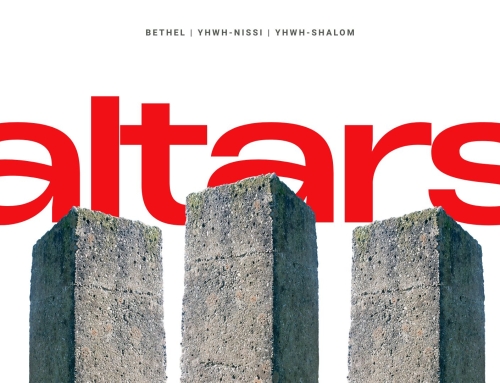
That’s what God was asking Israel to do with the twelve stones in Joshua 4. He wanted them to take something from the middle of the Jordan and establish it as a permanent reminder of what He had done. God knew they were going to face more battles, more challenges, and more uncertainty. He wanted them to have something they could look at and remember that God had made a way. The stones were a physical reminder that their God was faithful.
The question for us is: What have we memorialized? Maybe you’ve built an altar around a relationship that ended badly, a betrayal, rejection, failure, disappointment, or something someone said to you years ago. Maybe one painful moment has become a reference point for everything that happens afterward. We say things like, “I’m never going to let that happen again,” or “I’ll never trust someone like that again.” Without realizing it, we can begin building our lives around the memory of what hurt us.
But here’s the danger: what we continually memorialize can eventually begin to define us. God didn’t tell Israel to forget their past. He told them to remember what He had done. There is a difference between remembering what happened and allowing what happened to become the greatest thing you remember.
Today, take some time to think about the altars you’ve built in your life. What memories have you given more power than they deserve? What experiences still determine how you respond to people, relationships, opportunities, or even God? Then ask yourself another question: What has God done that I have forgotten? The goal isn’t to erase your past. The goal is to remember your past through the faithfulness of God.
Prayer: God, show me the things I have allowed to become altars in my life. Help me recognize the memories that have shaped me in unhealthy ways. I don’t want to deny my past, but I also don’t want my past to define me. Teach me to remember Your goodness more than I remember my pain. Help me build my life around what You have done rather than what has been done to me. Amen.
Action: Write down five things God has done for you. Don’t overthink them. Write down the first five things that come to mind and spend a few minutes thanking Him for each one.
DAY 2 — REMEMBER THE WAY THROUGH
Joshua 4:1–3
“Take up twelve stones from the middle of the Jordan…”
The stones Israel carried didn’t come from the other side of the Jordan. They came from the middle of the river. That matters because the place that once stood between Israel and the promise became the place from which they carried their testimony. The Jordan had been an obstacle, but God turned that obstacle into a memorial.
Sometimes we wish we could erase the difficult parts of our story. We wish we could go back and change what happened, avoid the betrayal, prevent the loss, or skip the season of pain. But what if God doesn’t want to erase every difficult chapter? What if He wants to redeem what happened in that chapter? Israel would look at those stones and remember the river, but more importantly, they would remember the God who brought them through it.
Your testimony isn’t simply that you went through something hard; your testimony is that you went through something hard and God was faithful. You don’t have to pretend the river wasn’t deep. You don’t have to pretend the battle wasn’t painful. You don’t have to pretend the loss didn’t hurt. But you can remember that God was there.
Some of the strongest faith in your life may come from looking back and realizing, “I didn’t think I was going to make it, but God brought me through.” The thing you once thought would destroy you can become one of the greatest testimonies of God’s faithfulness in your life.
The place of your greatest struggle can become the place of your greatest testimony.
Prayer: Jehovah-Mephalti, my Deliverer, thank You for every river You have brought me through. Help me see my past through the lens of Your faithfulness. I don’t want my pain to be the only thing I remember. Help me remember that You were with me, even when I couldn’t see You. Redeem the difficult places in my story and use them to testify to Your goodness. Amen.
Action: Write a short testimony beginning with this sentence: “I didn’t think I was going to make it, but God…” Finish the sentence and thank Him for bringing you through.
DAY 3 — DON’T FORGET THE GOOD
Psalm 103:2
“Praise the Lord, my soul, and forget not all his benefits.”
David speaks to his own soul and gives it an instruction: don’t forget. That’s interesting because apparently we need to be told to remember God’s goodness. We naturally remember pain. Ask someone about the worst day of their life, and they can often tell you exactly where they were, what someone said, what they were wearing, and how they felt. But ask them to name ten things God has done for them, and suddenly they have to think about it.
Why is that? Because pain demands our attention, but gratitude requires our intention. We don’t have to work very hard to remember what hurt us, but remembering God’s goodness often requires us to stop, reflect, and intentionally give thanks. That’s why Scripture repeatedly calls God’s people to remember. Remember the Exodus. Remember the Passover. Remember the covenant. Remember His works. Remember His faithfulness.
We have to learn to remember correctly.
This doesn’t mean ignoring reality. It doesn’t mean pretending everything is okay when it isn’t. It means refusing to allow the negative to become the only lens through which we see reality. There may be something difficult happening in your life today, but God has also been good. There may be something you are waiting for, but there are also prayers He has already answered. There may be a battle you haven’t won yet, but there are battles He has already brought you through.
Don’t let today’s difficulty erase yesterday’s faithfulness.
Israel’s problem wasn’t that they had experienced difficulty. Their problem was that they often allowed their difficulty to make them forget God’s goodness. They looked at what they didn’t have and forgot what God had already provided. They looked at the wilderness and forgot the Red Sea. They looked at the giants and forgot the God who had delivered them.
We can do the same thing. We can allow one bad thing to become louder than a hundred good things God has done. We can allow one betrayal to make us suspicious of everyone. We can allow one unanswered prayer to make us question God’s goodness. We can allow one painful season to redefine our understanding of God.
But Scripture calls us back to remembrance.
Remember what God has done.
Prayer: Father, forgive me for the times I have remembered my problems more than I have remembered Your goodness. Train my heart to recognize Your faithfulness. When I am tempted to focus only on what is wrong, remind me of everything You have already done. Give me a grateful heart that refuses to forget. Let gratitude become stronger than fear and remembrance become stronger than discouragement. Amen.
Action: Begin a “God Was Good” list. Write down one thing every day that reminds you of God’s goodness. When something difficult happens, add something good God has done alongside it.
DAY 4 — REMEMBER THE CROSS
Hebrews 10:12
“But when this priest had offered for all time a single sacrifice for sins, he sat down at the right hand of God.”
The Old Testament is filled with altars. They were places of worship, covenant, sacrifice, encounter, and remembrance. Noah built an altar after the flood. Abraham built altars as God established covenant with him. Moses built altars as Israel entered into covenant with God. Elijah repaired an altar that had been torn down. Again and again, the altar became the place where God’s people responded to who God was and what God had done.
But all of those altars were pointing toward something greater. The sacrifices of the Old Testament were never the final answer. The blood of animals could not ultimately remove sin. Every sacrifice pointed forward to the perfect sacrifice that was still to come.
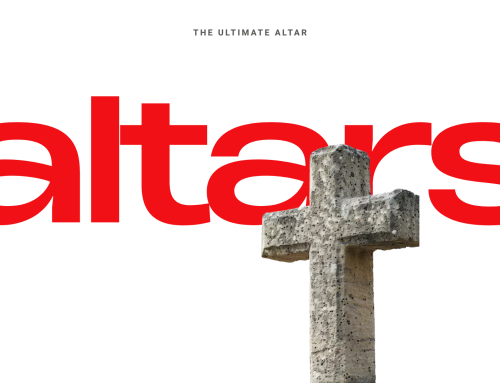
The cross is the ultimate altar.
At the cross, Jesus became the sacrifice that every other sacrifice had been pointing toward. He accomplished what we could never accomplish ourselves. The Old Testament altar said, “Bring a sacrifice.” The cross says, “God provided the sacrifice.” The Old Testament sacrifices had to be repeated. Jesus offered Himself once for all.
And this changes the way we think about altars. We don’t build an altar because we are trying to convince God to love us. We don’t sacrifice because we are trying to earn His favor. We worship because He has already been good to us.
The cross is the greatest memorial of God’s goodness. When you look at the cross, remember that God loved you enough to send Jesus. When you feel forgotten, remember the cross. When you feel condemned, remember the cross. When you wonder whether God is good, remember the cross. God has already proven His love.
The cross doesn’t mean that nothing bad will ever happen to us. It means that the bad thing never gets the final word. Jesus does. Our painful experiences may become part of our story, but they don’t have to become the final interpretation of our story. We can look at the worst moments of our lives through the lens of Calvary and remember that God is still good.
Prayer: Jesus, thank You for the cross. Thank You that Your sacrifice is enough. When I am tempted to define You by my circumstances, remind me to look at Calvary. Let the cross become the greatest altar of remembrance in my life. May everything else I remember ultimately point me back to what You have done for me. Help me to never allow what happened to me to become greater than what You did for me. Amen.
Action: Spend five quiet minutes today thanking Jesus for the cross. Don’t ask Him for anything. Just remember. Remember His sacrifice, His love, His grace, and His faithfulness.
DAY 5 — Jehovah-Mephalti
Psalm 34:17
“The righteous cry out, and the Lord hears them; he delivers them from all their troubles.”
There is a name for God that we need to remember: Jehovah-Mephalti — the Lord my Deliverer. He is the God who brings us out, the God who rescues, the God who makes a way, the God who meets us in the middle of the river, and the God who does not abandon us in the wilderness.
Israel’s stones were a reminder that God had delivered them through the Jordan. But their story didn’t end there. They would face another battle, another challenge, another moment when they would need to trust God. The stones gave them something to remember when their faith was tested again.
And so do we.
There will always be another Jordan. There will always be another challenge, another uncertain season, another moment when we don’t know how everything is going to work out. And when that moment comes, we have a choice. We can build another altar to fear, disappointment, bitterness, or what someone did to us, or we can remember.
Remember Jehovah-Mephalti.
Remember your Deliverer. Remember the God who has already brought you through. Remember the prayers He answered, the doors He opened, the moments He sustained you, and the times He gave you strength when you had none left. Remember the cross. Remember the empty tomb. Remember that the same God who was faithful then is faithful now.
The goal of this series isn’t to make us people who never remember the past. It’s to make us people who remember the past correctly. We don’t have to deny the pain. We don’t have to pretend the bad things didn’t happen. We simply refuse to give the pain the highest place in our memory.
We remember the One who was faithful in the pain.
We don’t forget the battle; we remember the One who fought for us. We don’t pretend the river wasn’t there; we remember the One who made a way through it. We don’t erase the wound; we remember the One who sustained us through it.
And perhaps that’s what God wants to do through this series. He wants to teach us how to build altars of remembrance that point us toward Him rather than altars that keep us trapped in what happened to us.
The altar reminds us that the story is bigger than the moment.
Your pain is part of your story, but it doesn’t have to be the author of your story. Your past is part of your story, but it doesn’t have to determine your future. What happened to you matters, but it doesn’t have to become greater than what God has done for you.
So remember the good.
Remember the provision.
Remember the breakthrough.
Remember the answered prayer.
Remember the people God sent into your life.
Remember the times He protected you when you didn’t even know you needed protection.
Remember the moments when you thought you were finished and God reminded you that your story wasn’t over.
Remember what God has done.
And when you remember, let it lead you back to Jesus. Let the cross become the greatest altar of remembrance in your life. Let it remind you that God is good, that God is faithful, that God keeps His promises, and that God has not abandoned you.
Because the stones in Joshua 4 were never meant to become objects of worship. They were meant to point Israel toward the God who made a way.
And that’s what our memories should do.
Our memories should point us to God.
When you look back at your life, don’t only see what happened. Look for where God was.
Look at the moments you thought you wouldn’t survive and remember that He sustained you. Look at the places where you thought the story was over and remember that He opened another chapter. Look at the things you lost and remember what He gave you. Look at the doors that closed and remember the doors He opened.
And when you come to the places that still hurt, don’t let the pain become the altar.
Let the faithfulness of God become the altar.
Because the enemy wants you to remember the wound, but God wants you to remember the Deliverer.
And when you don’t know what to remember, remember the cross.
Remember Jesus.
Remember grace.
Remember mercy.
Remember the empty tomb.
Remember that Jehovah-Mephalti is still your Deliverer.
The Lord who brought you through your last river is still with you at the next one. The God who was faithful then is faithful now. And the God who delivered you before has not changed.
So build your altar. Remember His goodness. Tell the story. Pass it to the next generation. And when you look back, don’t just remember what happened to you; remember what God did for you, what God did through you, and how God brought you through.
Jehovah-Mephalti. The Lord my Deliverer. Remember Him.